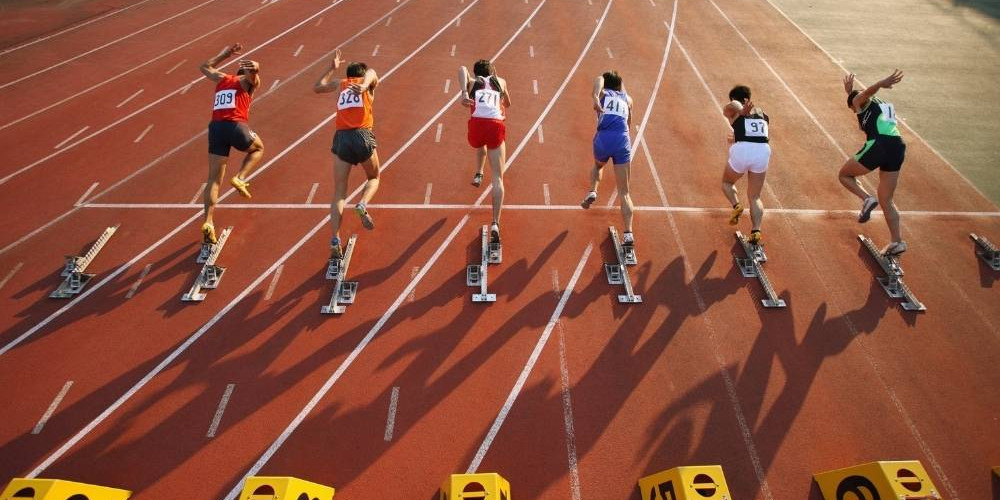
The Silent Language of Motion
In the world of high-stakes sports and personal achievement, we often find ourselves captivated by the loud moments—the explosive sprint, the heavy lift, the final, breathless push toward the finish line. We celebrate grit, we idolize effort, and we worship the ‘grind.’ Yet, in our pursuit of greatness, we frequently overlook the quiet foundation upon which all these achievements rest: the way we move. We assume that as long as we arrive at the destination, the path we took to get there is secondary. But what if the secret to consistent, long-term performance isn’t found in how hard we push, but in how gracefully we flow?
This physical steadiness provides a vital foundation for applying sports psychology principles that ensure our mental game remains as sharp as our physical execution.
Reflecting on the nature of excellence, one realizes that true mastery is rarely about brute force. It is about the economy of motion. When we move with better mechanics, we aren’t just performing an athletic task; we are engaging in a sophisticated dialogue between our intentions and the laws of physics. It is a realization that the body is not just a tool to be used, but a vessel to be tuned.
The Relationship Between Efficiency and Resonance
Why do some athletes seem to age like fine wine, maintaining their peak for decades, while others burn out in a flash of injury and exhaustion? The answer often lies in the invisible architecture of their movement. Better mechanics act as a buffer against the friction of life. When our joints are aligned, when our muscles fire in the correct sequence, and when our center of gravity is understood rather than fought, we experience a sense of resonance.
This resonance is the antithesis of wasted energy. Consider the difference between a jagged, forced motion and one that is fluid. The former requires a massive cognitive and physical tax—every movement is a battle against one’s own body. The latter is a partnership. By refining our mechanics, we reduce the ‘internal noise’ of our physical system. This allows us to redirect that saved energy toward focus, strategy, and endurance. Consistency, then, becomes a natural byproduct of efficiency. It is easier to repeat a motion that feels right than one that feels like a struggle.
The Psychological Weight of Physical Alignment
We often separate the mind from the body, treating the ‘mental game’ as something that happens exclusively above the neck. However, anyone who has ever moved with perfect form knows that the two are inextricably linked. When your mechanics are sound, your mind finds a sense of calm. There is a profound psychological security that comes from knowing your body will respond exactly as you intend it to.
Conversely, poor mechanics create a subtle, underlying anxiety. Your subconscious knows when a movement is risky or inefficient. It sends signals of hesitation, which manifest as a lack of confidence or a ‘mental block.’ By focusing on the mechanics of our movement, we are essentially practicing mindfulness in motion. We are teaching our nervous system that it is safe to excel, which in turn allows our mental performance to remain steady even under the highest pressures.
The Long Game: Mechanics as a Form of Longevity
If we view performance as a marathon rather than a sprint, the importance of mechanics becomes even more apparent. High performance is not a one-time event; it is the ability to show up day after day, year after year, with the same level of quality. This is where the ‘secret’ of mechanics truly shines. Better movement is a form of self-preservation. It is the ultimate insurance policy against the wear and tear that eventually sidelines even the most talented individuals.
When we move poorly, we are essentially borrowing energy from our future selves. We might get the result today, but we are paying for it with the health of our tendons, the integrity of our cartilage, and the resilience of our nervous system. Moving with intention and proper form is an act of respect for our future potential. It ensures that the ‘you’ of five years from now can still compete at the same level as the ‘you’ of today.
Cultivating the Art of Better Movement
Improving one’s mechanics is not a destination, but a continuous process of refinement. It requires a shift from a ‘results-only’ mindset to a ‘process-oriented’ one. To begin this journey of introspection and improvement, consider the following pillars of refined motion:
- Kinesthetic Awareness: Develop the ability to feel where your body is in space without looking. This internal map is the foundation of all adjustments.
- The Power of the Slow-Down: Real progress often happens at half-speed. By slowing down our movements, we can identify the hitches and imbalances that are invisible at full speed.
- Core Integration: Understand that all powerful movement radiates from the center outward. A stable trunk allows the limbs to move with greater precision and less strain.
- Feedback Loops: Whether through video analysis or the watchful eye of a coach, external perspective is vital to correct the ‘blind spots’ in our own perception.
- Rhythmic Breathing: Breath is the metronome of movement. Aligning your respiration with your mechanics creates a cadence that sustains performance.
Conclusion: Finding the Path of Least Resistance
Ultimately, moving with better mechanics is about finding the path of least resistance to reach the highest peak. It is a philosophy that transcends sports and touches every aspect of how we show up in the world. When we stop fighting our own anatomy and start working with it, we unlock a level of consistency that was previously out of reach.
Consistency is not found in the heroic effort of a single day, but in the quiet, disciplined adherence to quality in every repetition. As we refine our motion, we refine our character. We learn that excellence is not an act of will, but a habit of grace. By honoring the mechanics of our movement, we pave the way for a lifetime of high performance, grounded in a body that is as resilient as it is capable.